
AI-generated editorial illustration; not a photograph of an actual event.
Begin with something you already do
You do not need a new hobby or new equipment for this exercise. Choose an activity already available to you and name one thing that interests you about it. “See how this blue looks beside orange” is a usable intention for sketching. “Become a more creative person” asks a single evening to carry a much larger ambition.
The publisher’s description of Jenny Odell’s How to Do Nothing presents a critique of measuring attention through productivity. That offers a perspective for this question, not evidence that a particular leisure routine will improve your health or happiness. [1]
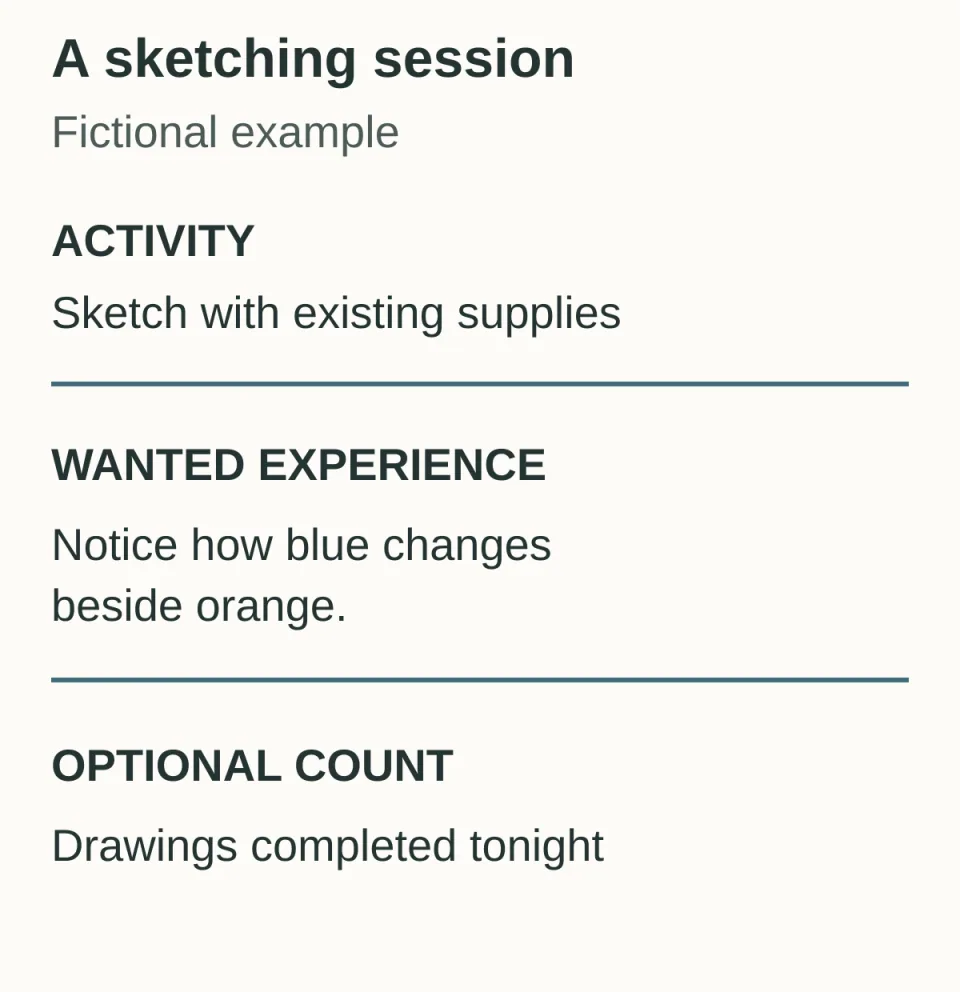
A session can have a purpose that is not a total.
Separate the activity from a separate result
Ryan and Deci’s review of motivation distinguishes doing something because it is interesting or enjoyable from doing it toward a separate outcome. It also recognizes that external goals can be willingly chosen. [2] A counter alone cannot tell you why someone is doing an activity.
A person may enjoy trying to beat a game score. Another may care about finishing a knitted gift for a friend. Neither needs to abandon that purpose to pass a test of “proper” leisure. The useful question here is narrower: does this particular number belong in the experience you want today?
Fictional worked example
Activity and experience | Optional count | Information to keep |
|---|---|---|
Sketching: notice two colors together | Drawings completed | A stopping time if needed |
Reading: follow an interesting scene | Pages tonight | A bookmark |
Music: listen to a familiar melody | Practice streak | Helpful music notes |
Knitting: enjoy working with yarn | Items finished this month | Pattern stitch counts |
Board game: enjoy choices with friends | A separate productivity total | Game scoring the group wants |
These are fictional possibilities, not reports of what worked for other readers. You can adapt a row, ignore the table or keep the number. There is no required before-and-after rating.
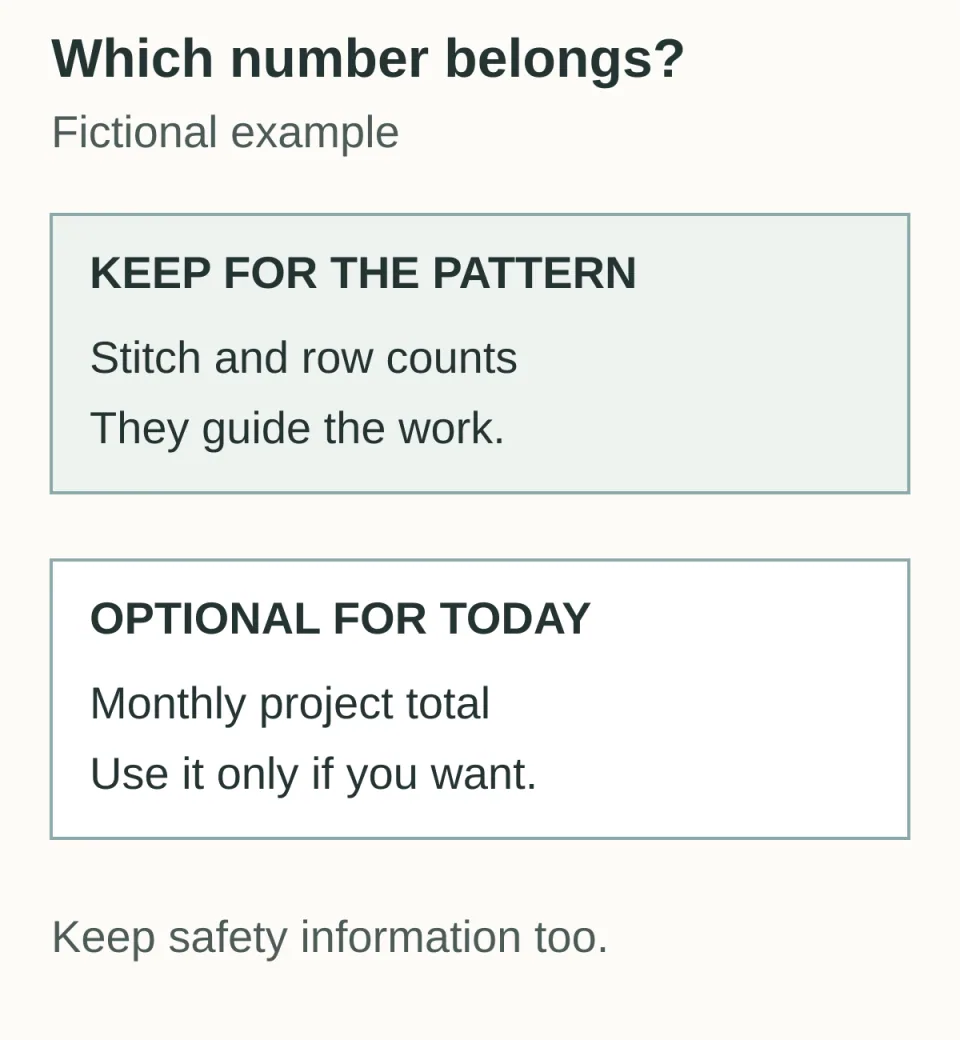
Leave aside an optional score, not needed information.
Keep useful information without keeping a total
Leaving an optional counter aside does not mean discarding instructions, timing or information the activity needs. A stitch count belongs to a knitting pattern. A time limit may help you keep an existing commitment. Safety information still matters. Decide what you are setting aside, rather than treating all numbers as one category.
For a reading session, a bookmark may be enough to help you return. You do not also have to record pages, minutes, a rating and a streak unless those records serve something you want. Equally, there is no need to delete a useful reading history merely because you are trying an evening without a page target.
Do not turn the experiment into another obligation
A one-line intention is enough. You can keep it in mind rather than build a new tracker. When the session ends, you might notice a detail that held your attention. You do not have to write it down, share it or repeat the exercise tomorrow.
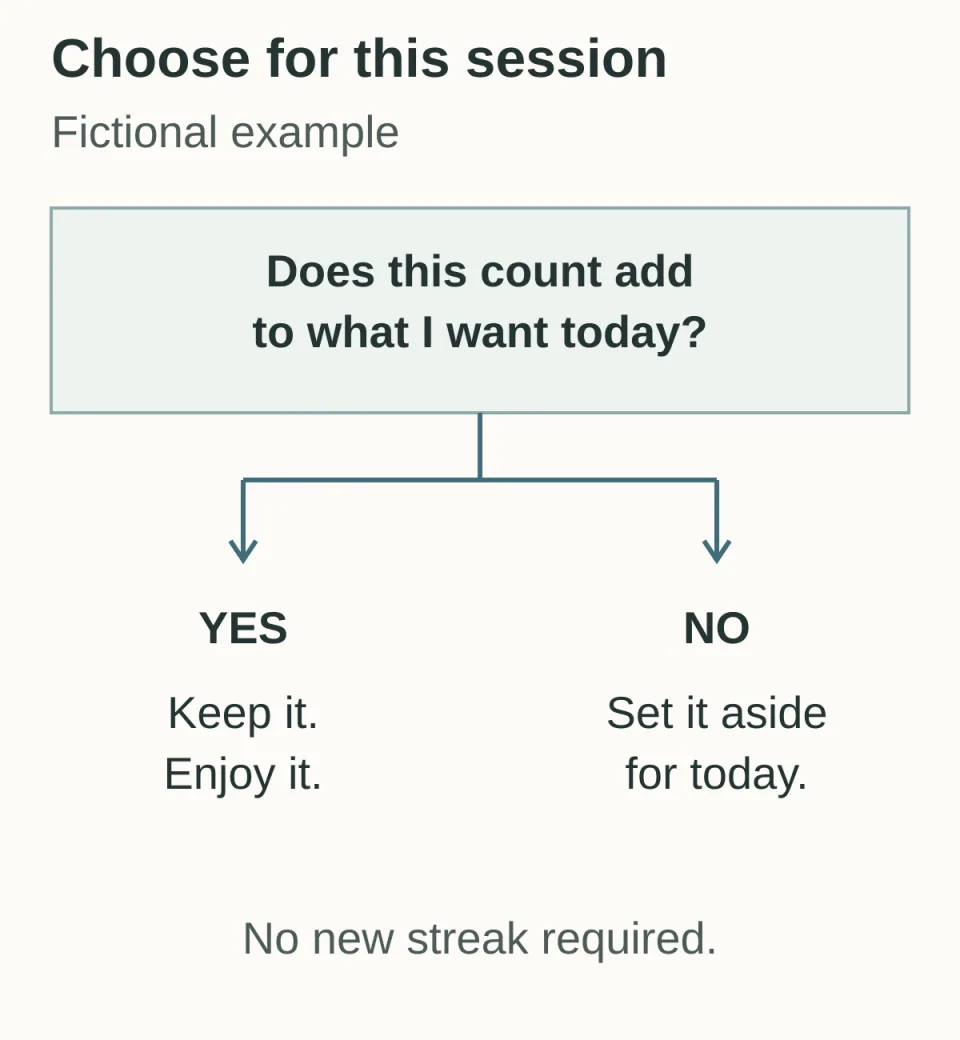
A score can be part of the activity you enjoy.
The cited sources did not test this particular one-session exercise. It is a small editorial suggestion for considering a hobby’s purpose, not a treatment or a promise of greater enjoyment. If the count makes the activity more interesting, keep it. If it is getting in the way, you can choose a session in which something else gets your attention.
Keep useful counts; drop only the unwanted score
Constructed examples: the same number can serve the activity, describe a preference or become an unwanted target. There is no requirement to record leisure.
| Situation | Decision and next step |
|---|---|
| A knitting pattern calls for 24 stitches | Keep the count needed to follow the pattern. Removing a performance target does not mean ignoring instructions. |
| A board-game group enjoys its scoring rules | Keep the score if that is part of the agreed fun. This guide is not a reason to change other players’ rules unilaterally. |
| A reading streak makes you rush a book you wanted to enjoy | Try one session without updating the optional streak. Stop at a natural place; do not replace it with a mandatory enjoyment score. |
If useful, ask once: Which number helps me do the activity, and which number am I only trying to satisfy? No worksheet or continuing tracker is required.
These are editorial examples, not reported experiences or tested outcomes.
Source notes
1. Jenny Odell, How to Do Nothing, Melville House / Penguin Random House. Checked October 25, 2026, Asia/Seoul (October 24 UTC): publisher description and edition metadata only. Hardcover: 9 April 2019; paperback: 29 December 2020. The full book was not read for this article.
2. Richard M. Ryan and Edward L. Deci, Intrinsic and Extrinsic Motivations: Classic Definitions and New Directions (2000), Contemporary Educational Psychology 25, 54–67. Checked October 25, 2026, Asia/Seoul (October 24 UTC): official SDT PDF, abstract and definitions on printed pages 54–56 and 60. The original PubMed URL returned only a footer; its earlier abstract-check record is retained without a fresh-success claim. No separate prior visit date was recorded. The PDF is the same paper, not additional independent evidence.
Evidence and scope
1. Intrinsic and Extrinsic Motivations — Ryan and Deci
Claim covered: Ryan and Deci’s review of motivation distinguishes doing something because it is interesting or enjoyable from doing it toward a separate outcome. It also recognizes that external goals can be willingly chosen. [2] A counter alone cannot tell you why someone is doing an activity.
The review distinguishes enjoyment of an activity from separate outcomes and recognizes willingly endorsed extrinsic goals.
Intrinsic and Extrinsic Motivations — Ryan and Deci. English edition; source jurisdiction as stated. Checked: .
Conceptual review; no health, happiness or routine-specific effect is inferred.
2. Editorial application
Claim covered: For one leisure activity, write down what you want to experience: following a melody, noticing a color or spending time inside a story. If a score keeps pulling you away from that purpose, try leaving that optional number aside for this session. Keep the practical information you need, and keep the score too if it is part of the fun. The point is to choose what matters to you, not to meet another rule about how to relax.
TidyNot practical application, separated from the original source’s claims.
TidyNot editorial suggestion. English edition. Checked: .
Conceptual review; no health, happiness or routine-specific effect is inferred.