Habits
Music While Reading: Check Understanding, Not Just Enjoyment
Use research and a short reading check to separate comprehension from musical preference. Record sound, answers, interruptions and your next choice.
Choose a small, observable change rather than a promise of transformation. Use these guides to define a cue, protect important boundaries and review your own experience.
Looking for a specific problem? Compare all guides by the decisions they help you make, or choose a topic represented in this collection:
Use research and a short reading check to separate comprehension from musical preference. Record sound, answers, interruptions and your next choice.
For one leisure activity, write down what you want to experience: following a melody, noticing a color or spending time inside a story. If a score keeps pulling you away from that purpose, try leaving that optional number aside for this session. Keep the practical information you need, and keep the score too if it is part of the fun. The point is to choose what matters to you, not to meet another rule about how to relax.
An accountability check-in is easier to agree to when both people know what it involves. Say what you plan to do, what update you will send, and what response would help. Decide together whether reminders are welcome, what stays private, and how to pause or stop. You remain responsible for the activity; the other person takes on only the role they have agreed to.
Before opening a tool, finish this sentence: “I am here to ___, and I will stop when ___.” Make the answer specific enough to recognize, such as finding one receipt or reading a saved article. If you are opening it for fun, say so. The point is to choose what this visit is for, not to make every screen activity productive.
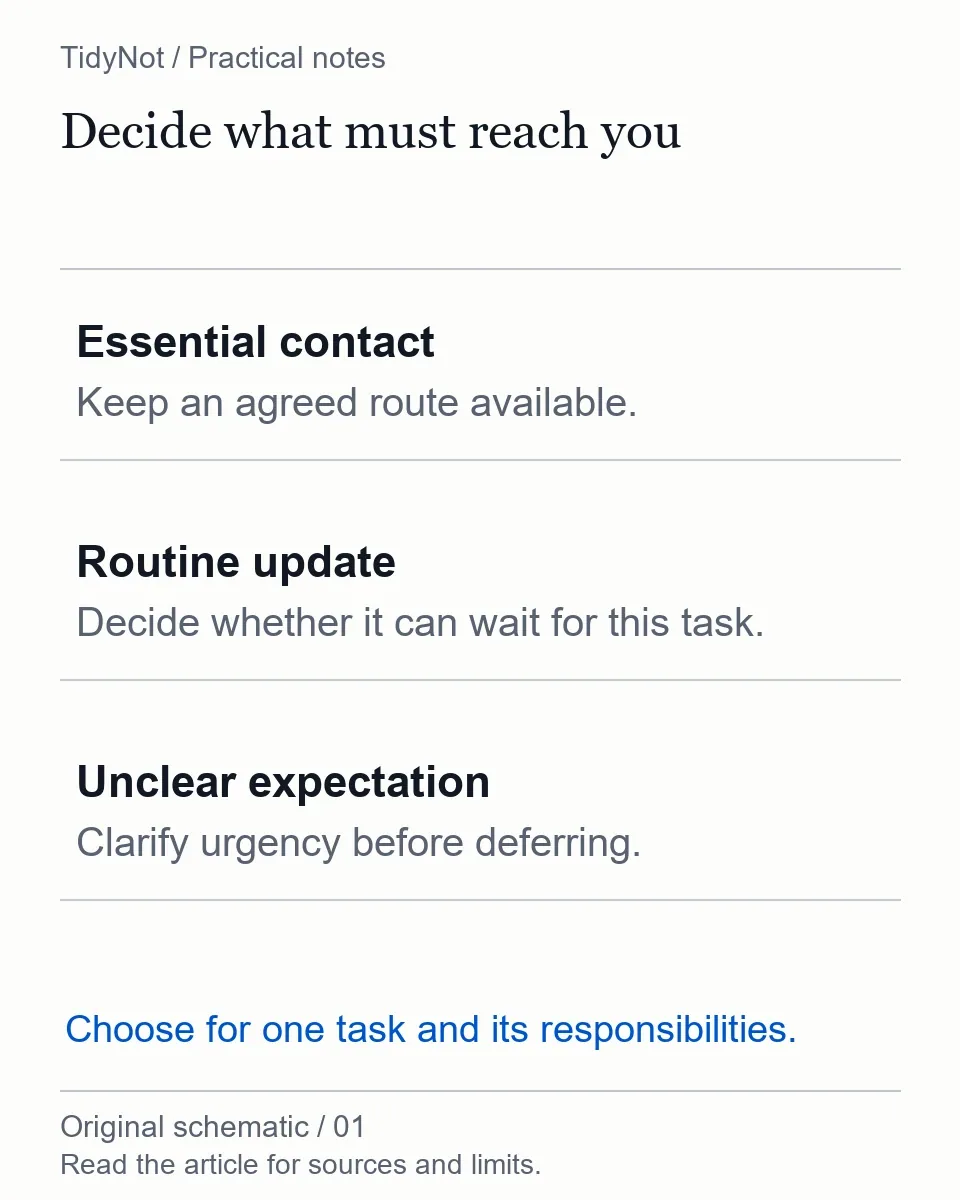
Classify notifications for one task while preserving essential contact routes.
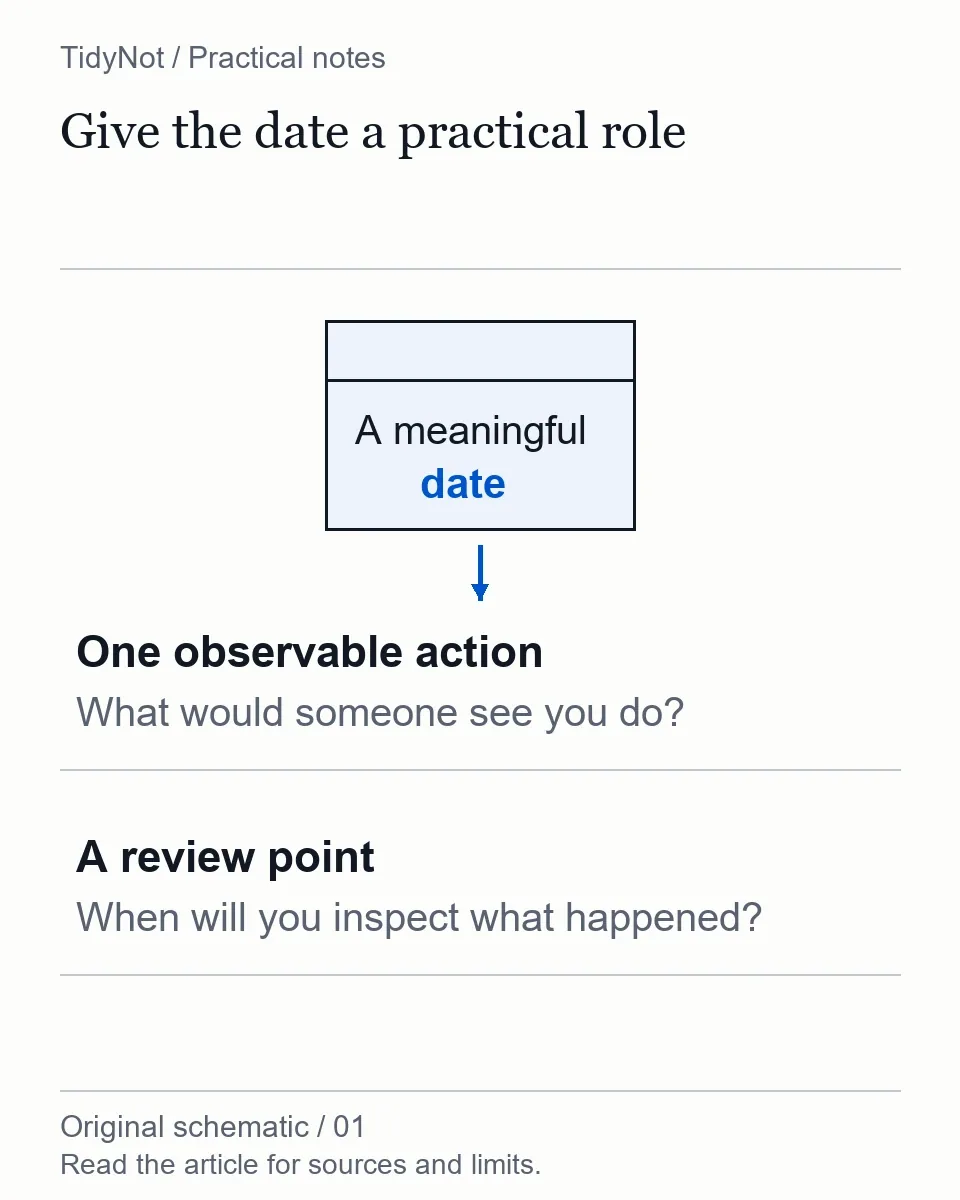
Use the date to define a small action, its context and a later review.
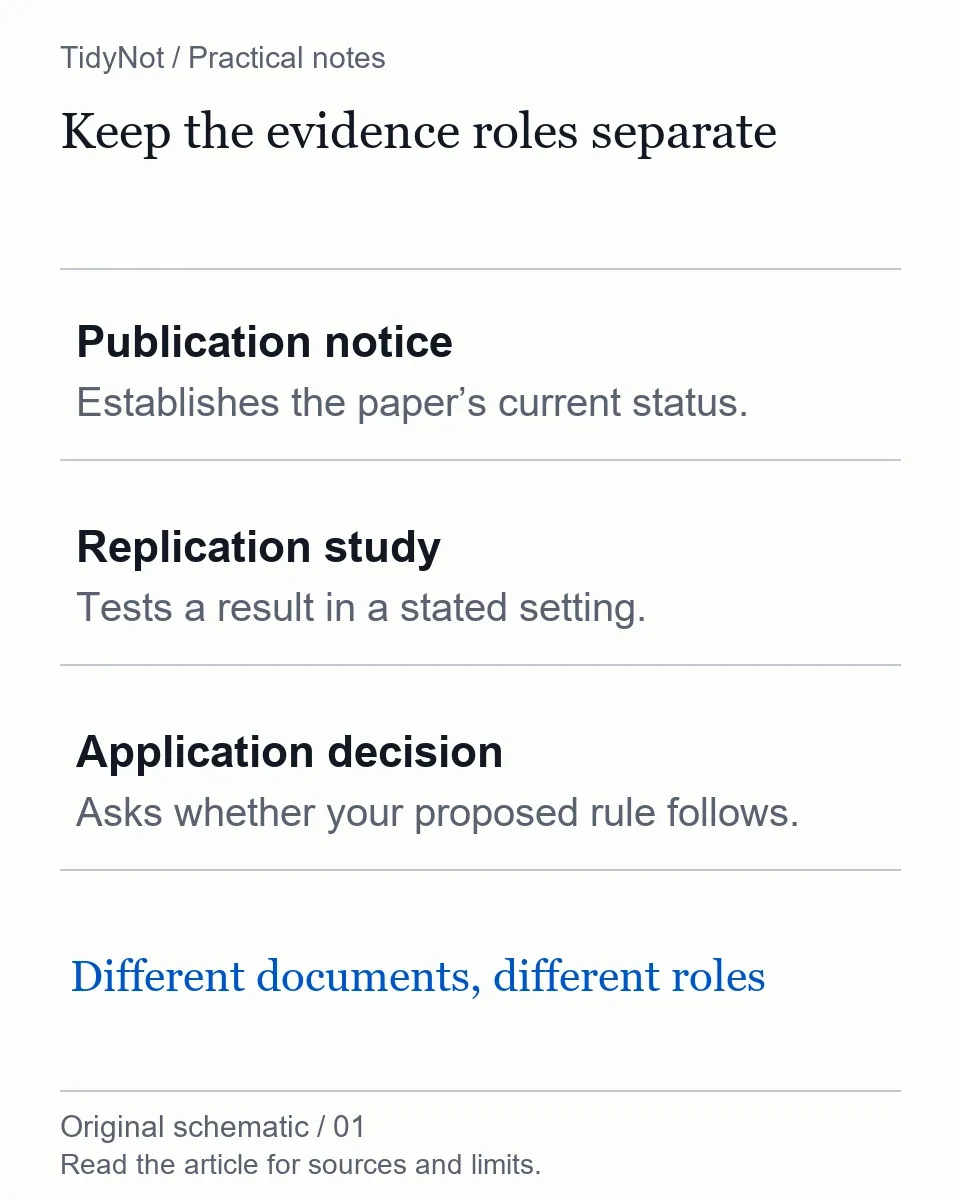
Separate the original claim, current publication status, replication and proposed application.
Try removing one optional routine step, protect required checks and record what becomes easier or harder.
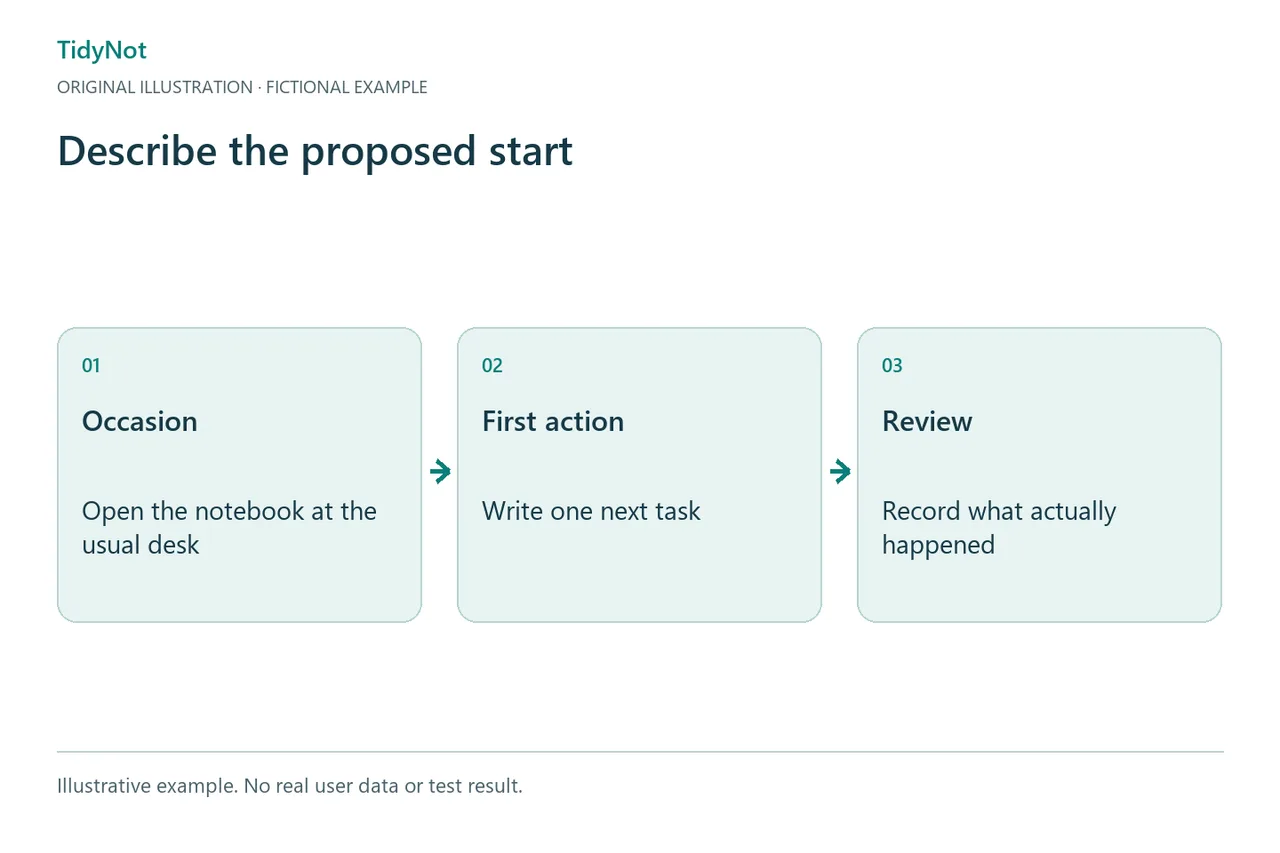
Describe a small starting action and a recognizable cue, then record what happened without promising a fixed habit deadline.