Work & Time
Test an Event Signup Form Before Sharing It
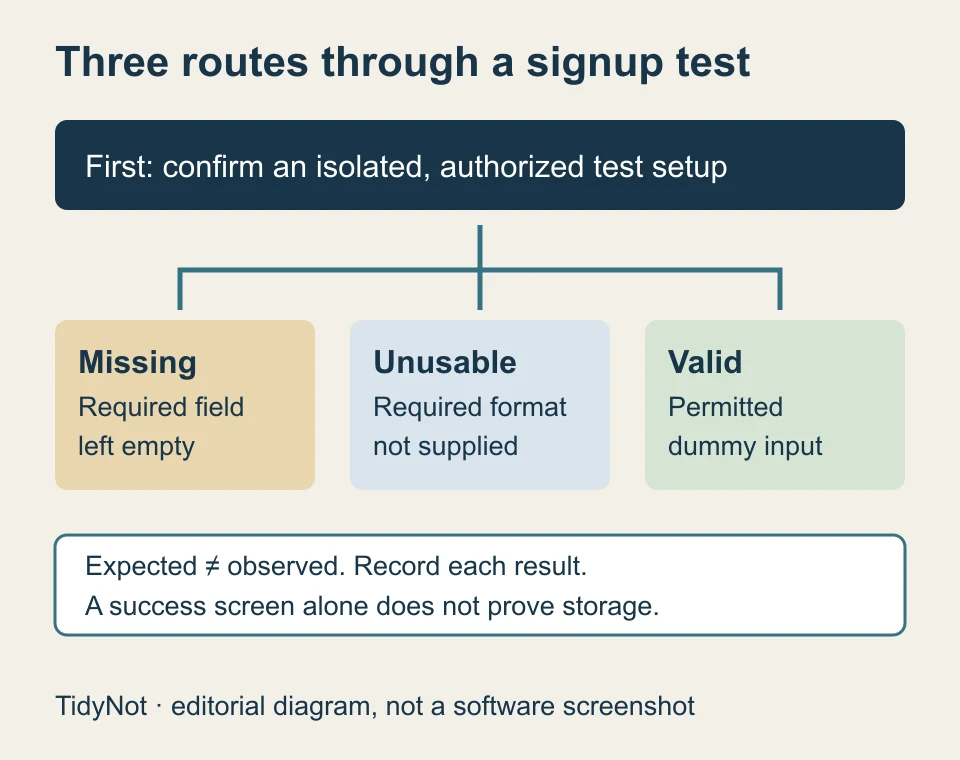
Test missing, unusable and valid signup responses in an authorized safe environment. Check confirmation, test records and notifications separately.
Keep the expected result, next action and person responsible visible. These guides help distinguish work you can do now from work waiting for a decision or handoff.
Looking for a specific problem? Compare all guides by the decisions they help you make, or choose a topic represented in this collection:
Test missing, unusable and valid signup responses in an authorized safe environment. Check confirmation, test records and notifications separately.
Before accepting a scope change, compare the new request with what was already agreed and write down what else would need to change. Check the deliverable, effort, review work, timing, and cost, leaving unknowns marked as unknown. Then put the request in front of the person who can decide. Recording a request begins that conversation; it does not itself approve the work or change the deadline.
To find what is stopping a task from starting, name the exact piece of work you want to begin and the result it needs first. Write a visible start condition, such as “approved wording is in the shared document,” rather than “waiting on content.” Then check whether each listed item really blocks that stage, belongs inside it, or is simply a preference. Keep an unconfirmed relationship marked as a question.
Before adding another task, write down what must exist when the project is finished. Split that result into its necessary parts, then check your activity list against them. A list that says “write, meet, review” can still miss the instructions someone needs to use the finished work. A simple deliverable map gives you a place to look for that gap.
To find a missing handoff, draw the steps in separate lanes for the people or roles responsible for them. Follow each arrow that crosses from one lane to another. Can you name what is being passed, who receives it, and how they know it is ready? If not, mark that gap before adding more steps.
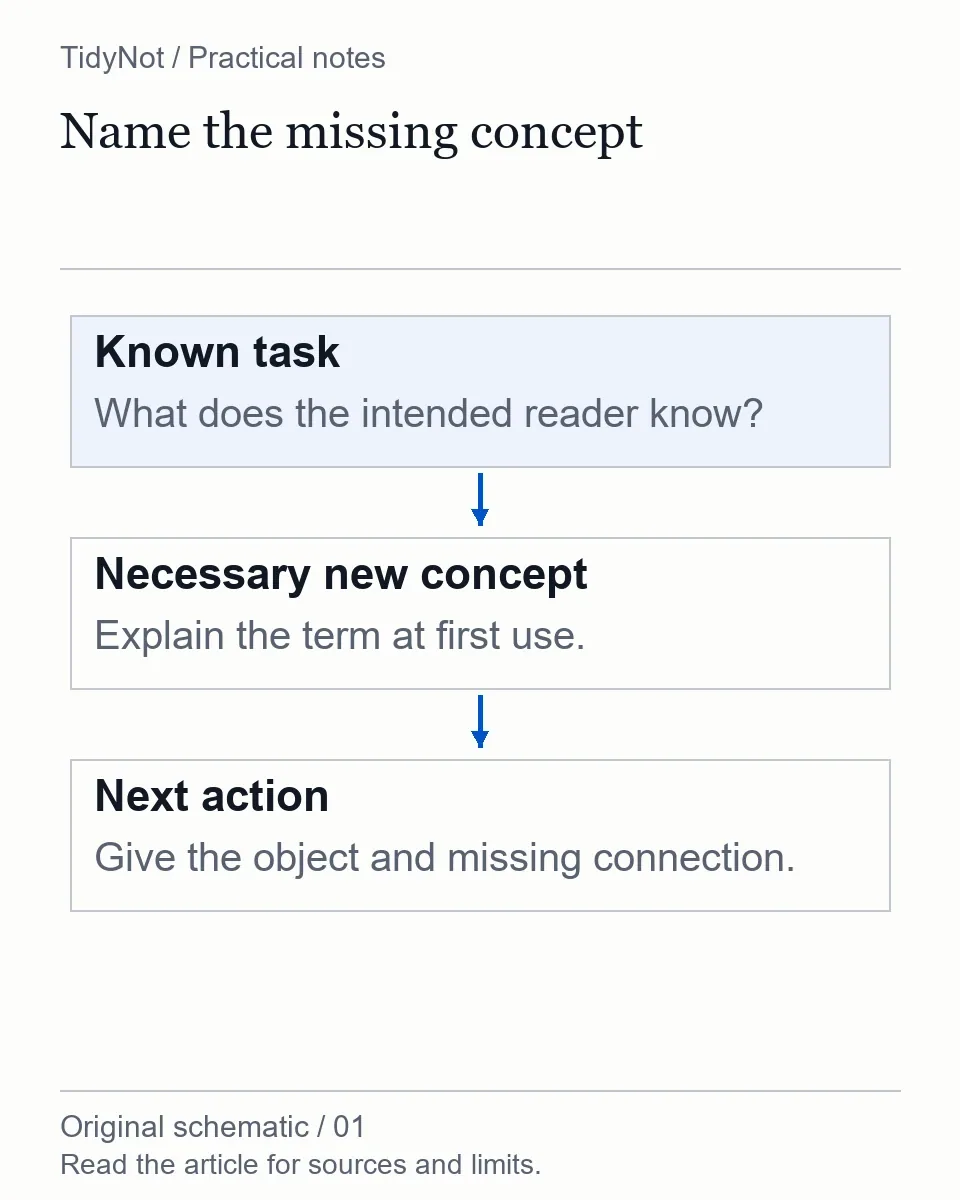
Identify the prerequisite idea and explain necessary terms at first use.
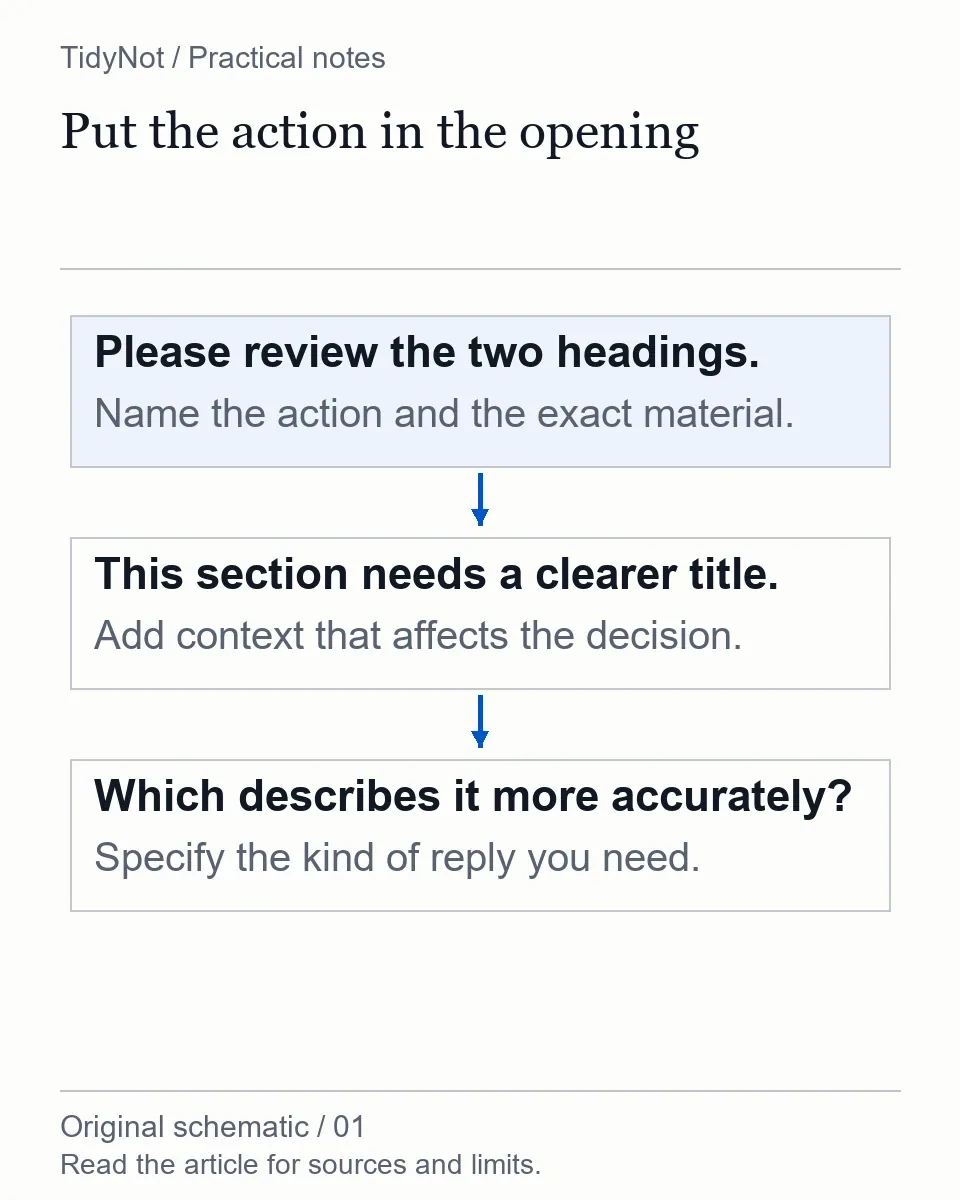
Put the requested action first, followed by the information needed to respond.
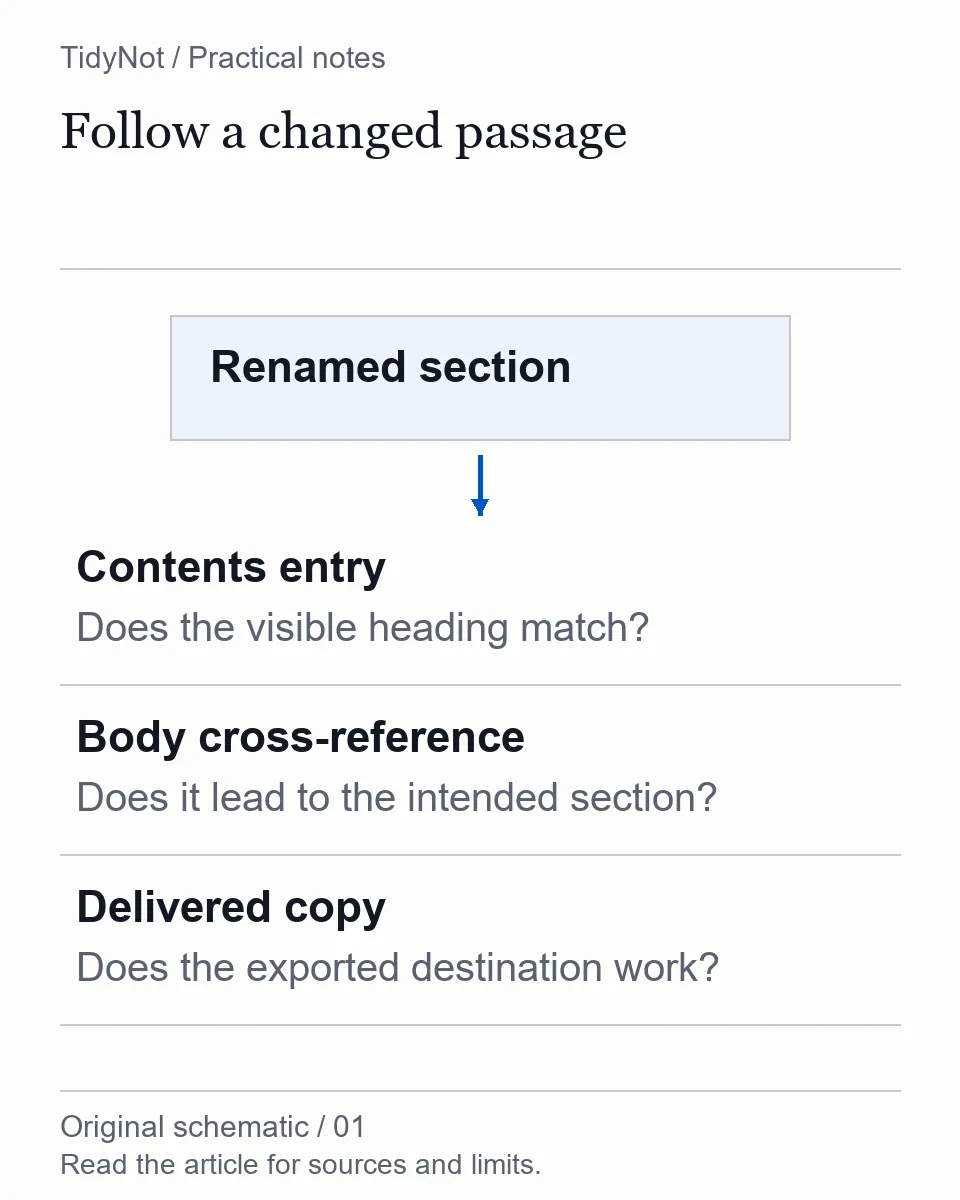
Trace a changed passage to its dependent document elements.
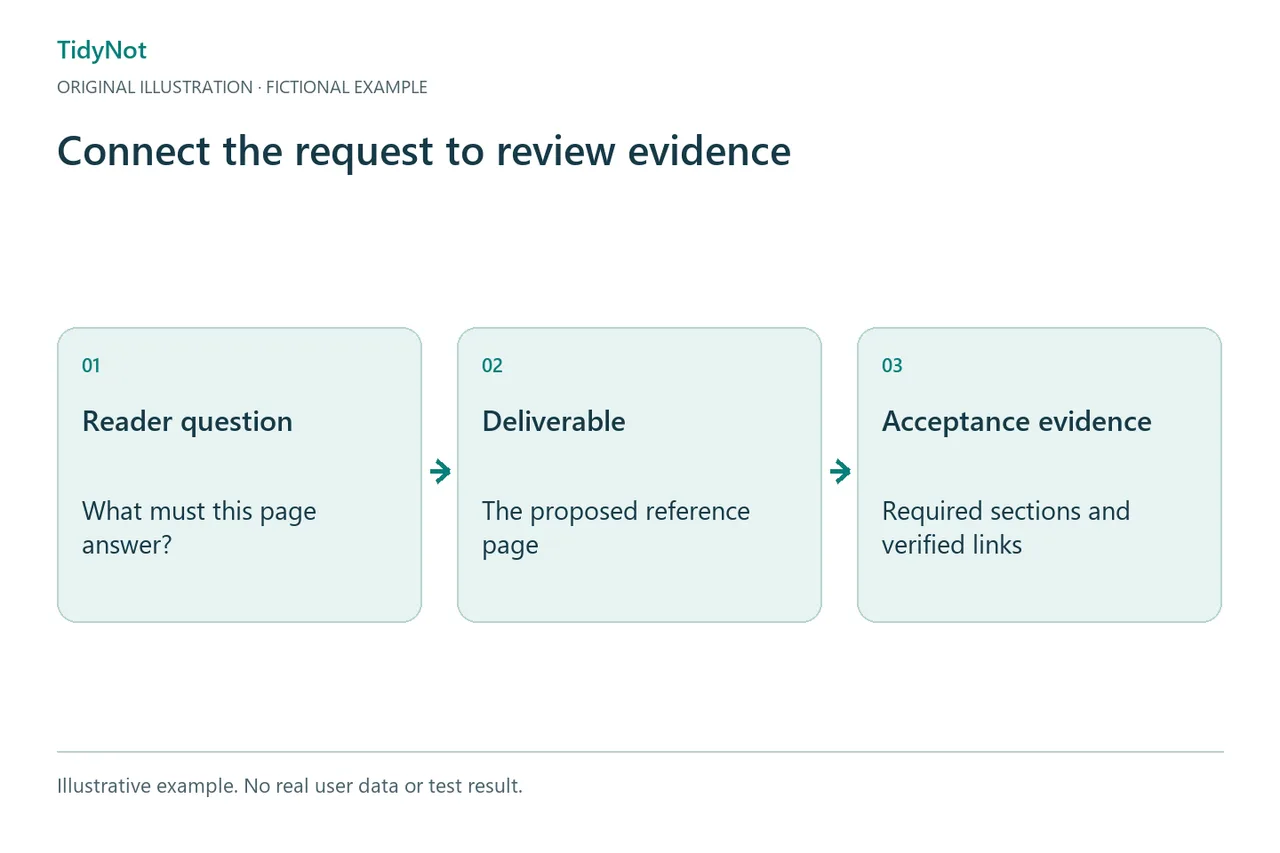
Agree on a task’s expected output, acceptance checks and reviewer before handing it over.
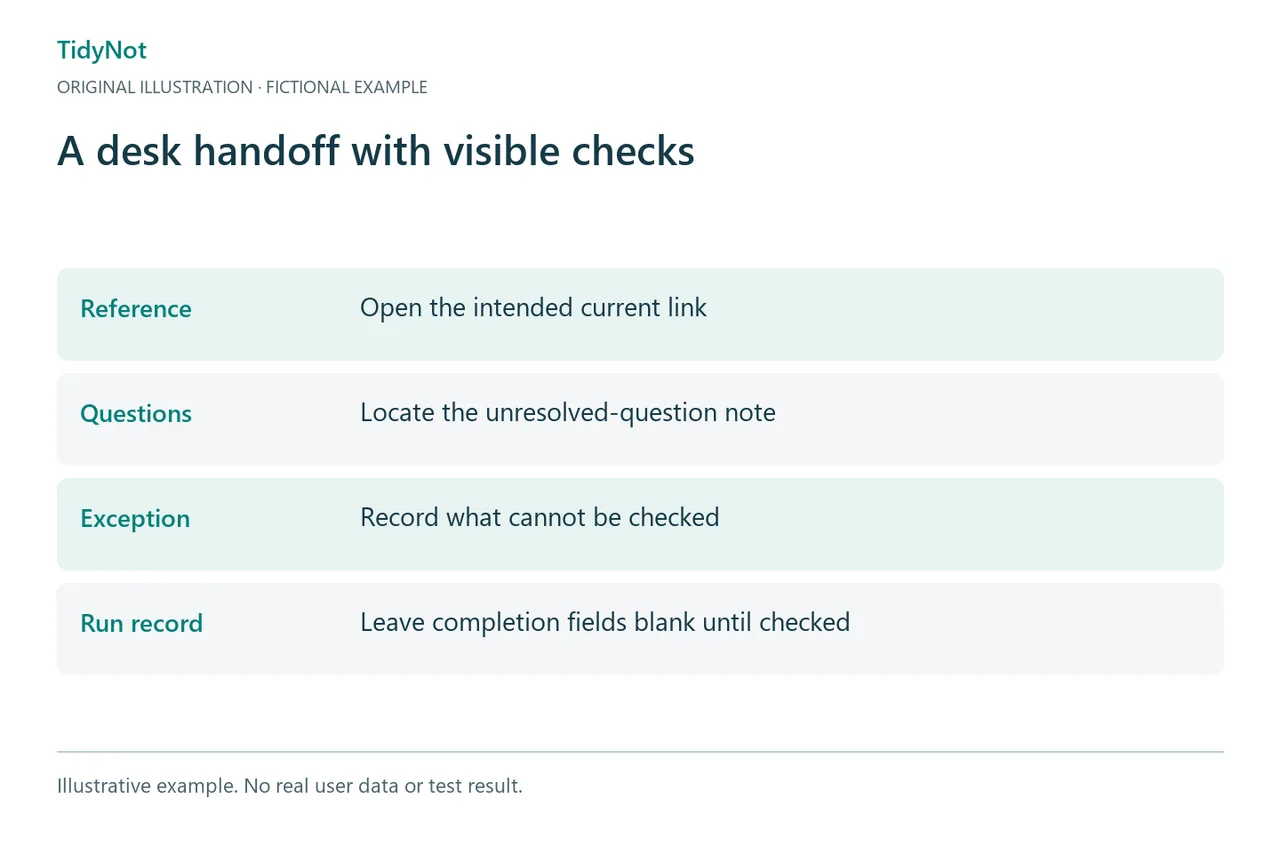
Write a task checklist with observable completion checks and place it where the work happens.
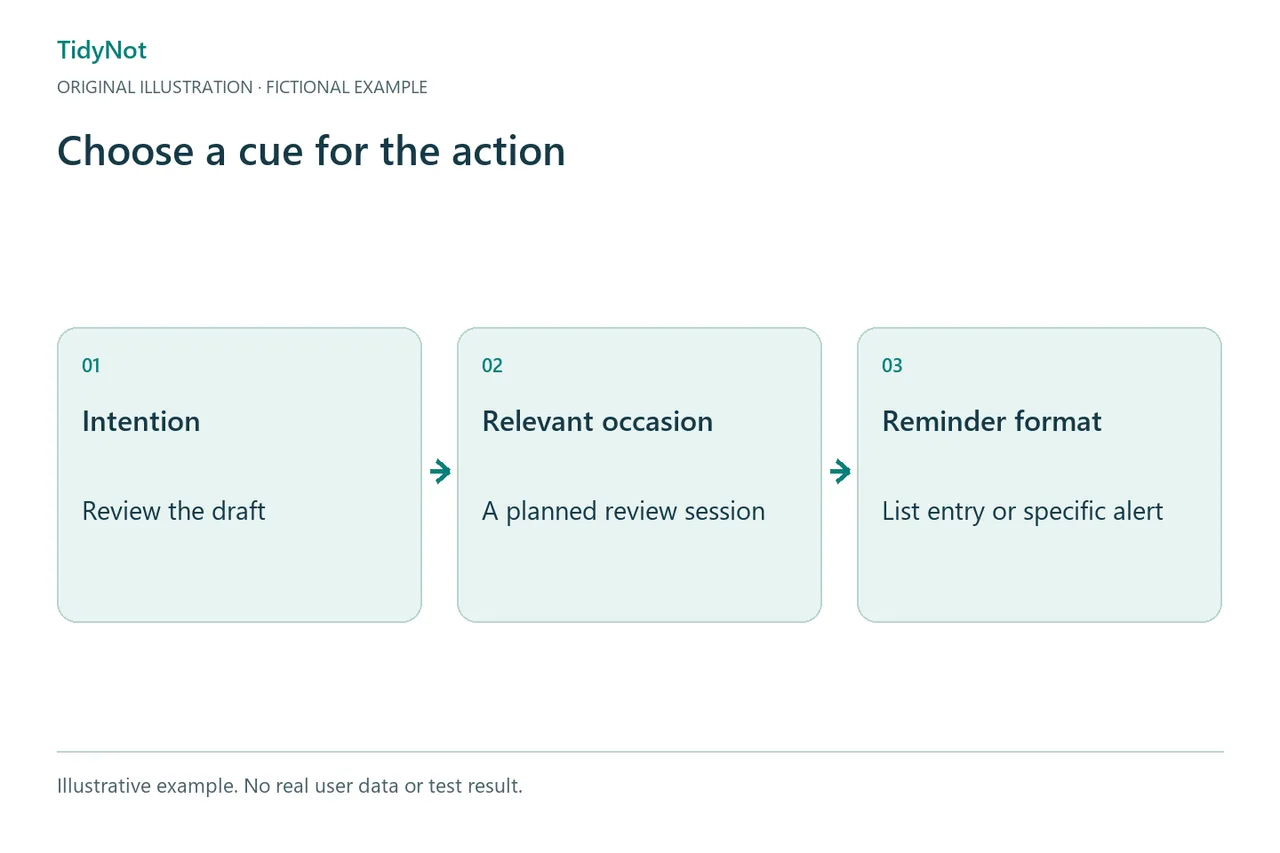
Choose a reminder for a clear action. Review its timing, delivery and usefulness before adding another notification.
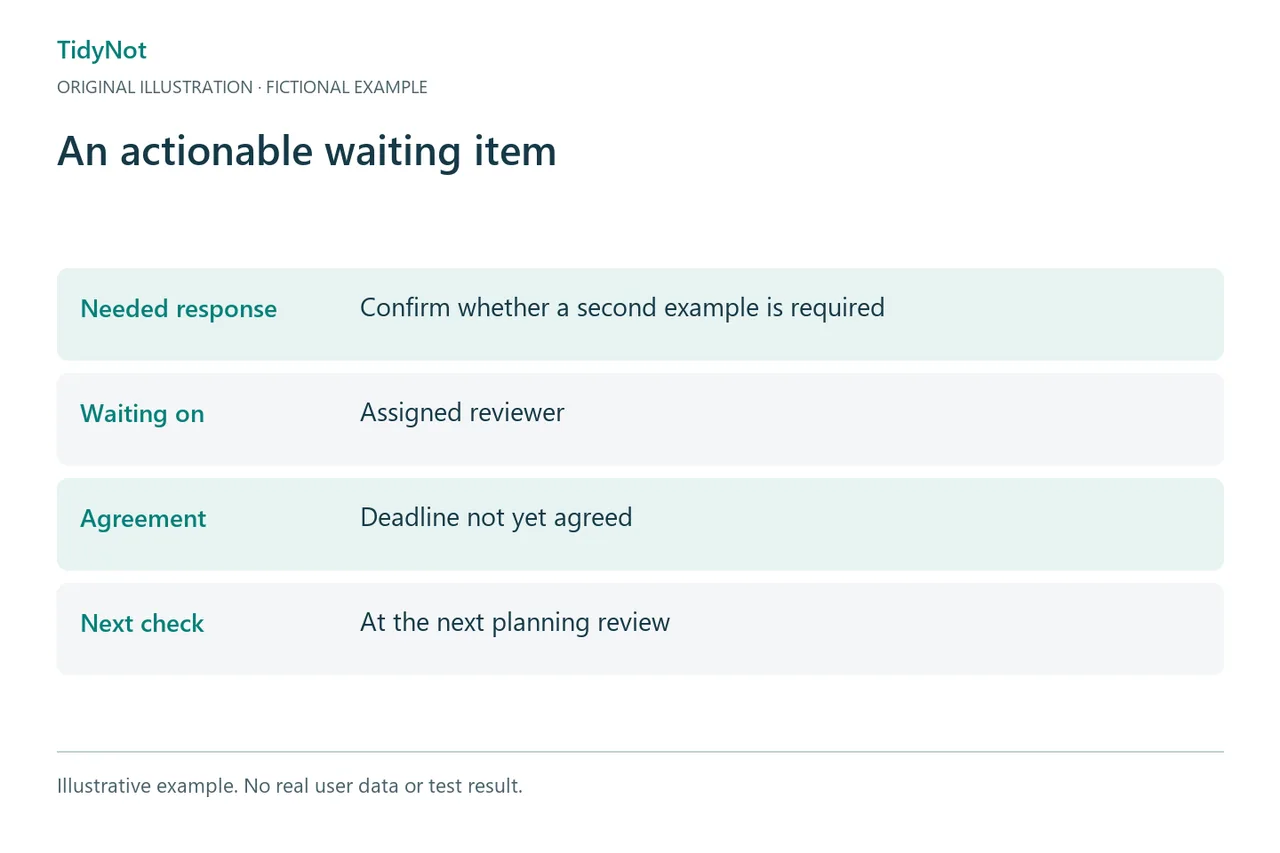
Record the reply you need, who owns it, and when to check again without confusing a follow-up date with an agreed deadline.