Start with one shelf, drawer or short length of rail. Choose a section you can return to use when you finish, and leave the rest of the closet alone for now. Keep a clean bag or box nearby for anything that belongs elsewhere.
The examples below describe an arrangement to try. They do not report a household makeover.
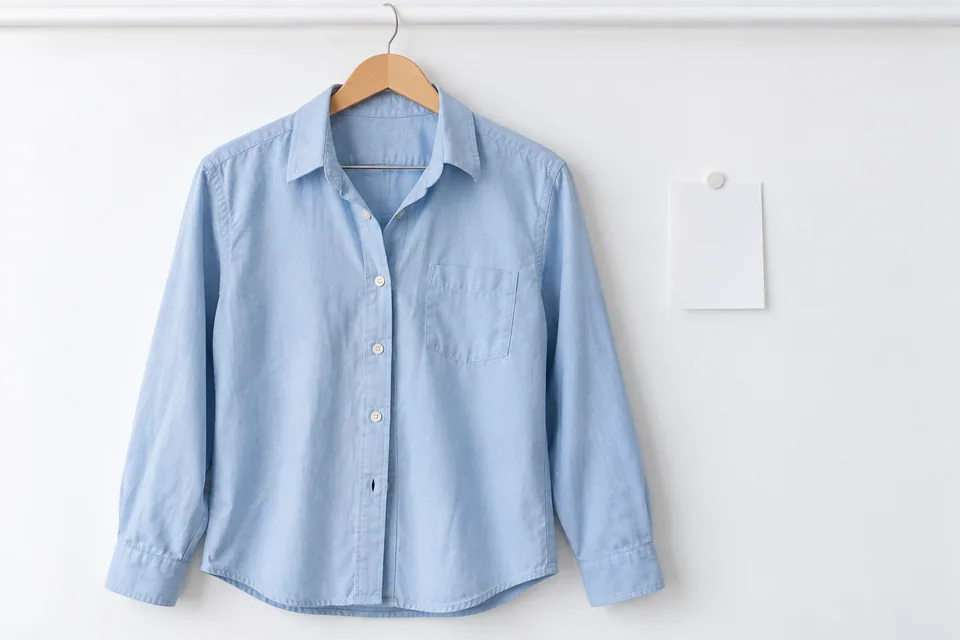
AI-generated editorial illustration of a waiting garment. No repair has been performed or assessed.
Group by how you get dressed
Look at what is in that section and name the groups you actually reach for. Work shirts and exercise clothes may need different places. If you choose outfits together, keeping those pieces near one another may suit the way you get dressed.
Use those as examples, not a required set of categories. A section shared with someone else needs group names and positions that they can recognize too. Check before moving another person's clothes or deciding what they no longer need.
Set aside anything that belongs in another room. Keep it separate from clothes waiting for a repair or a decision, so putting one group away does not hide the other.
Give a waiting garment a next action
A shirt with a missing button can keep returning to the same chair. Name the job that would let it move on. "Find a matching button" is a clearer next action than "sort clothes."
An uncertain fit needs a different decision from a missing button. So does an item whose owner has not been asked. Keep the question with the garment instead of putting every unresolved item into an anonymous bag.
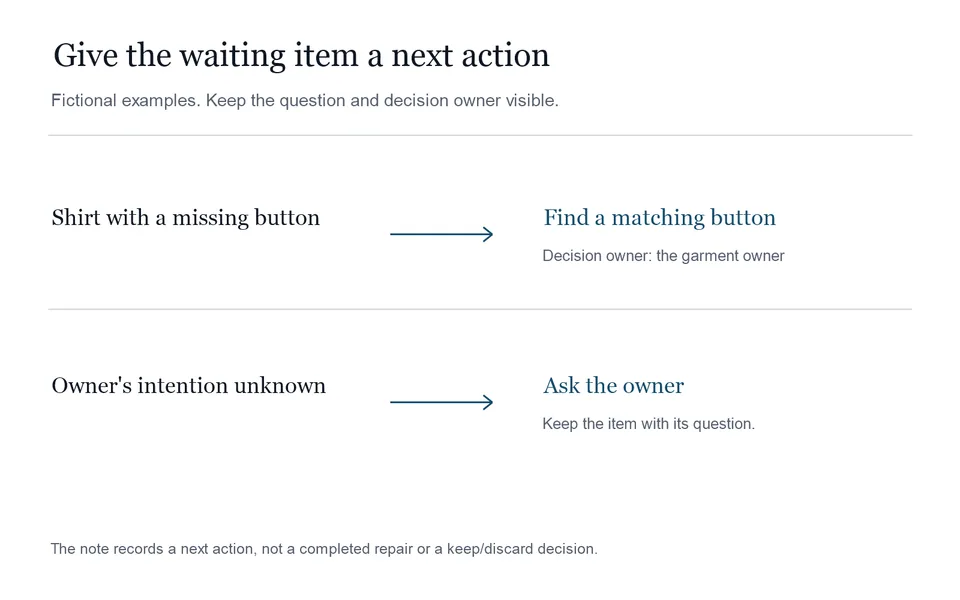
Fictional next-action notes. They record a question or task, not a completed repair or disposal decision.
Garment | Unresolved detail | Next action | Who can decide |
|---|---|---|---|
Shirt | Missing button | Find a matching button or ask about a repair | The owner |
Shared-household item | Owner's intention unknown | Ask before moving it into another category | The owner |
These are fictional examples. The notes do not establish that a repair is suitable, affordable or completed. Write the action that is genuinely available for the item you have.
Keep the garment's care information available. The FTC's care-labeling guidance describes cleaning instructions and warnings for covered garments. Read the actual label and any maker information before choosing a cleaning method. A care label alone does not assess a repair.
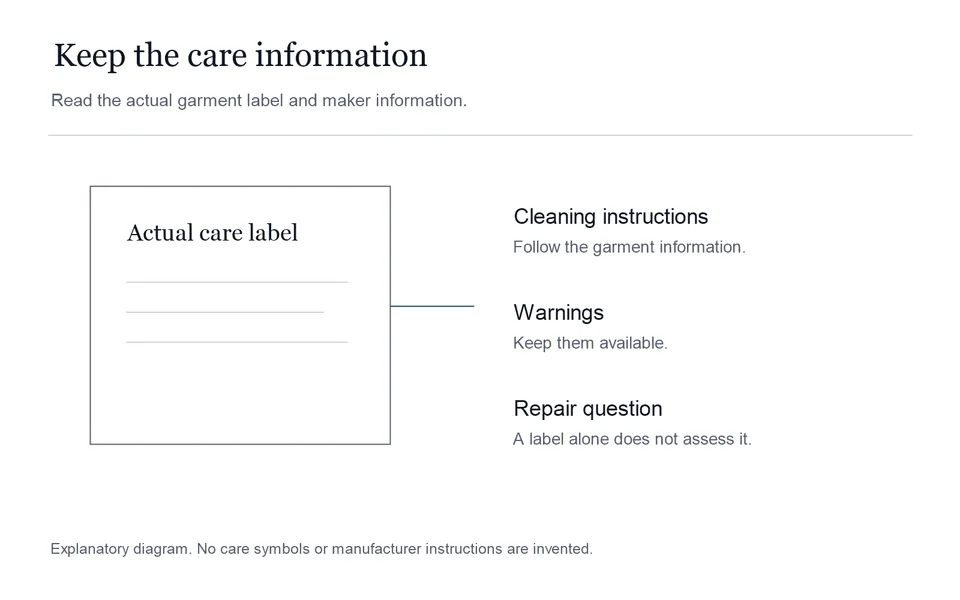
Use the actual garment information. This diagram invents no care symbols or manufacturer directions.
Give waiting clothes a known place so that someone can find the garment and its question together. If a reminder date helps you return to the question, use it as a reminder. Reaching that date does not decide whether the garment should be kept or discarded.
Return the clothes you use to reachable places
Use existing shelf edges, drawers or hangers as boundaries. Leave enough room to lift one item out without pulling its neighboring group apart. A temporary label can help while you try a group name; you can decide later whether it needs to stay.
For example, one shelf could hold folded T-shirts on one side and exercise clothes on the other. Seasonal items may fit in a separate suitable box you already have. The arrangement depends on the clothes and space, so check the items in their proposed places before buying a new divider.
Notice where the return gets awkward
Take out an item and put it back. If returning it means shifting another pile, give the group more room or move it to a place you can reach comfortably.
After the clothes are worn, look at where they collect. If the same group stops on the chair again, check whether it has a workable home or an unresolved next action. Keep those two problems visible so you can change the right part of the arrangement.
Plan where clothes return
Give ready-to-wear and unresolved garments different destinations. A storage decision does not establish that a garment can be worn or washed safely.
Sources and examples
The FTC page was checked on October 19, 2026 UTC, October 20 in Korea. It supports the limited explanation about care information; the layout, table and next-action notes are TidyNot's editorial suggestions. They do not set a time-unworn disposal rule or prescribe repairs.
Evidence and scope
1. FTC: Complying with the Care Labeling Rule
Claim covered: Keep garment care instructions available
FTC guidance describes care instructions and warnings for garments covered by the US rule.
FTC: Complying with the Care Labeling Rule. United States garment-labeling guidance. Checked: .
This does not assess whether a repair is appropriate; use the actual garment and maker information.
2. Editorial application
Claim covered: Next-action notes are planning suggestions
The notes show ways to record a pending decision; they do not establish that a repair was completed.
TidyNot editorial suggestion. English edition; adapt to the actual home and item. Checked: .
No measured time saving or tested household outcome is claimed.