A shoe cabinet can have an empty-looking shelf and still be awkward to use. A heel catches the shelf above it, or the door will not close once the shoes are inside. Try the pairs you reach for most before adding another rack.
Work with one existing shelf or section. Choose a place you can reach and put the shoes back in. This layout is for dry footwear; follow the shoe maker's care instructions for anything damp or needing treatment.
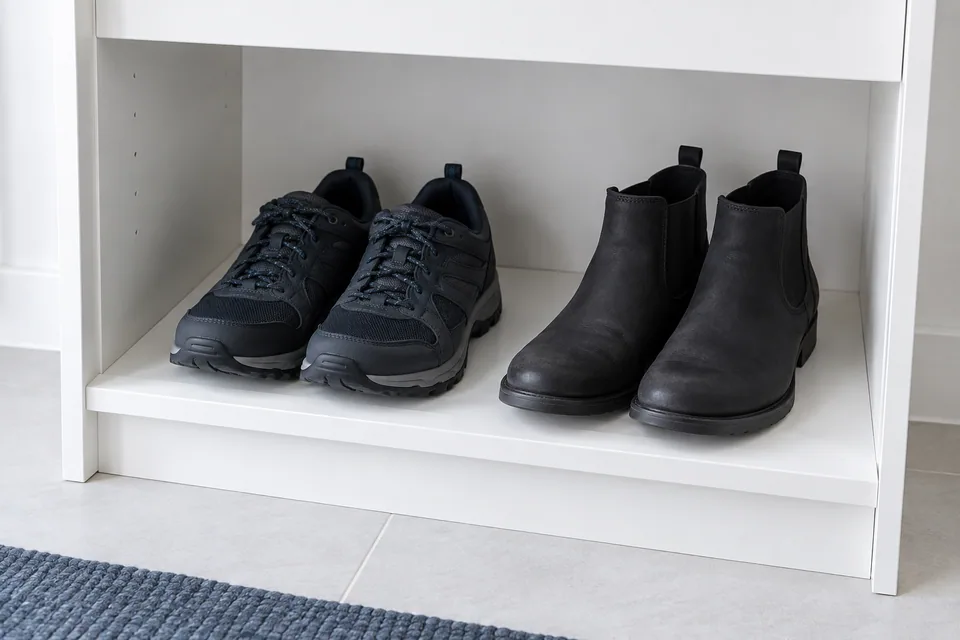
AI-generated editorial illustration of a generic cabinet. It does not show a tested fit or a specific product.
Choose the pairs that need the easiest reach
Look at the shoes you are using now. In a shared home, ask which pairs each person needs before moving them to a less accessible place. Frequency of use is a question for the owner, not a rule about how many pairs someone should keep.
Separate the pairs you want on this shelf from occasional shoes while you try the arrangement. Keep each pair together so the trial includes the space both shoes occupy.
For example, you might want walking shoes near the front and formal shoes elsewhere. Those are starting points for a fictional layout. Someone who wears formal shoes every day would make a different choice.
Check the pair inside the cabinet
Put the actual shoes on the shelf. Look at the depth from heel to toe, the tallest part of the pair and the usable space around the door. A cabinet's outside dimensions do not tell you whether the shoes clear a hinge or fit between its shelves.
Close the door gently with the shoes in place. If it meets a heel or toe, move the pair and try again. Do not force the door to make an arrangement fit.
If you need measurements, measure the space the pair will actually use. Include the part of the cabinet where the door or hinge moves. Check the measurements against any insert before buying it, following the maker's fitting instructions.
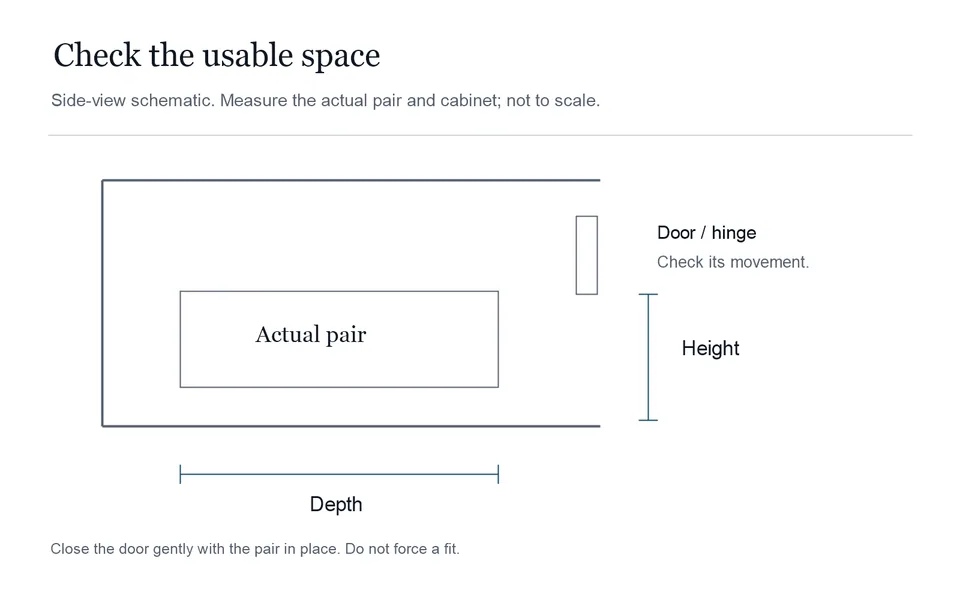
Measure your actual pair and the usable cabinet space. This schematic is not to scale.
Leave room to take a pair out
Try removing the pair you use most and putting it back. Notice whether you have to shift another pair first or hold the door while reaching around it. Give the difficult movement more room, even if the finished shelf looks less full.
On a deep shelf, a row behind the front pair may be hard to reach. Before adding another row, decide what will go there and how you will get it out. An occasional pair at the back still needs a way to leave the cabinet.
Stacking several pairs can create the same problem vertically. If taking out the bottom pair means rebuilding the pile, try fewer pairs in that spot. Use another suitable existing section for the remainder if you have one.
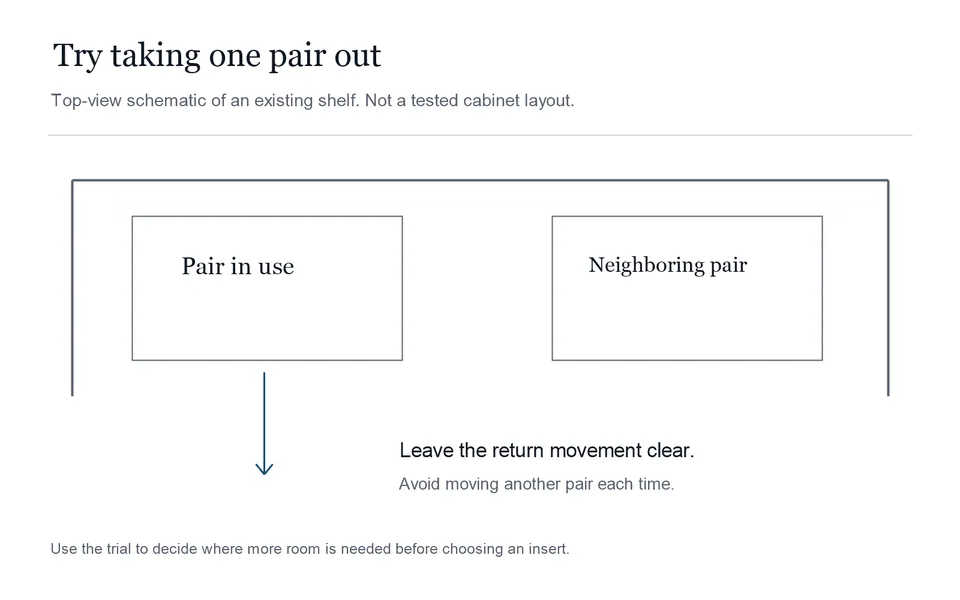
Try taking out the pair and returning it without shifting its neighbor. The positions are illustrative.
Make a note of the obstruction
Write down what fails during the trial. "Tall boots touch the shelf above" gives you something to check when considering a different position or an adjustable shelf. "Need more storage" is less useful at that stage.
Here are example notes, with no assumed cabinet dimensions or pair limit.
Pair | Proposed place | What to check |
|---|---|---|
Walking shoes used often | Front of the reachable shelf | Can the owner lift out both shoes and return them? |
Tall boots | A section with suitable height | Do the boots clear the shelf and door? |
Occasional formal shoes | Another suitable existing section | Can the pair be reached without unloading the front row? |
A temporary paper label can name the place while people try it. Use the wording they will look for, such as an owner's name or the kind of shoe. If the group keeps landing somewhere else, ask what makes that other spot easier before making permanent labels.
Keep the cabinet's instructions with the plan
Check the cabinet maker's shelf and fixing instructions before changing shelf positions or adding an insert. Follow the stated load limits and installation directions. The CPSC's Anchor It campaign addresses furniture tip-over hazards and advises following manufacturer instructions when securing furniture.
This shelf layout cannot establish that a cabinet or an attachment is secure. If the cabinet is unstable, address that condition using the maker's guidance before using it for the trial. Do not treat extra storage capacity as a reason to change its fixings.
Once the pairs have a workable place, keep the next return simple. Check where the shoes go after they are worn. If they stop at the entrance because the cabinet movement is awkward, change that movement before adding a new organizing product.
Sources and examples
The CPSC page was checked during drafting on October 20, 2026 in Korea. The layout and table are TidyNot's editorial examples, developed from the existing H03 planning brief. They have not been tested as a household makeover, drying method or measured increase in cabinet capacity.
Evidence and scope
1. CPSC: Anchor It!
Claim covered: Follow the maker’s furniture-fixing instructions
CPSC advises following manufacturer instructions when securing furniture against tip-over.
CPSC: Anchor It!. United States consumer-safety guidance. Checked: .
It does not specify this cabinet’s shelf capacity, fittings or installation method.
2. Editorial application
Claim covered: Try the fit before buying storage
The cabinet layout and reach checks are TidyNot suggestions, not measurements of the reader’s cabinet.
TidyNot editorial suggestion. English edition; adapt to the actual home and item. Checked: .
No measured time saving or tested household outcome is claimed.