A cleaning plan can become hard to return to when every missed task stays on the list. By the time you open it again, “clean the living room” may mean several different jobs, with no obvious place to stop.
Give the next session a clear boundary: one surface, one small group of objects, or one defined stretch of floor. Record what you finish and where you pause. Then leave a next action specific enough that you can recognize it when you return.
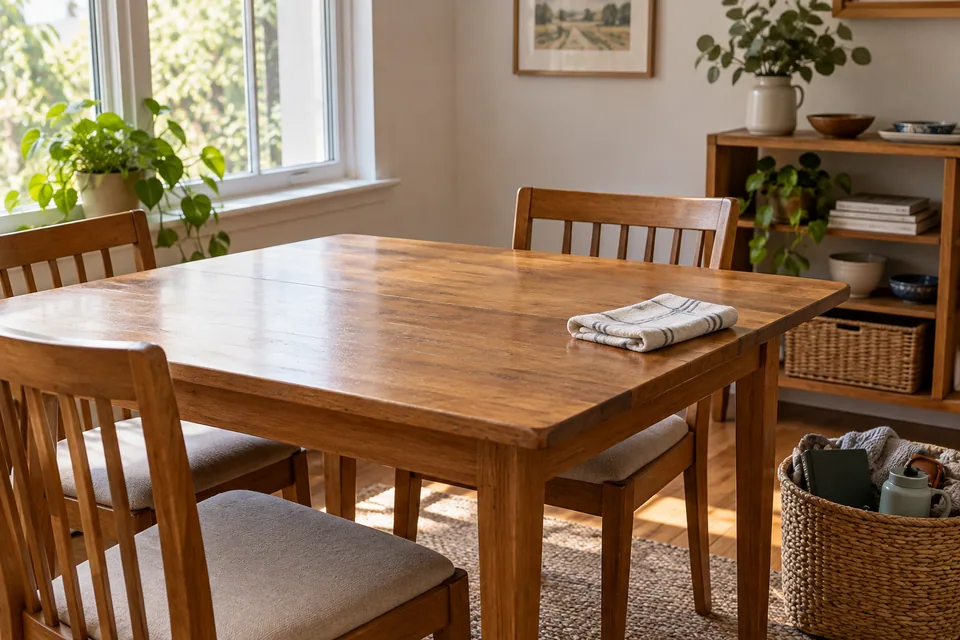
AI-generated illustration: the tabletop is a possible finish boundary; the rest of the room can be planned separately.
Choose how to divide the work
There are two useful starting structures. A task-based plan groups a kind of work, such as dusting selected surfaces. A zone-based plan groups a place, such as the dining corner. Choose the structure that makes the next session easiest to describe.
For example, a task-based session could cover the reachable shelf tops in the living room. A zone-based session could cover returning objects from the dining table and cleaning its surface. Both need a finish boundary. “Dusting” and “dining room” on their own leave too much open.
The guides we compared use different structures. Clean Mama assigns weekly work by task and adjusts the amount to the reader’s schedule. The Crowned Goat connects daily upkeep and weekly work to existing routines. Sara Lee Simplicity groups rooms into zones. These are examples to adapt to your space and responsibilities. Martha Stewart groups work by frequency.
Avoid putting the same work in both lists. If the table is already included in a dining-corner session, check whether a separate all-surfaces session would repeat it. A small home may need fewer zones; a shared home may need an explicit handover between people.
Define what finished means today
Before getting out supplies, complete this sentence: “Today I will finish ___, and I will stop when ___.” Name something you can see and check. A boundary can be as small as returning the objects on one tabletop and leaving that surface ready for its next use.
- Too open: clean the living room. More specific: return the books beside the low shelf to their agreed places.
- Too open: sort the kitchen. More specific: clear one section of counter so it is ready for the next meal.
- Too open: do all the floors. More specific: clean the accessible floor inside the dining corner, using the method suitable for that surface.
Choose the amount you can reasonably attempt with the access, energy, help, and time available today. Keep deeper jobs on a separate list if they would expand the session. Buying organizers or emptying an entire cupboard can turn a small routine into a different project.
If you share the work, write the responsible person’s name beside the boundary. Agree where objects belong before moving someone else’s belongings. A shared “done” mark is more useful when everyone understands the same finish point.
Leave a note when you pause
An interruption can happen before the boundary is complete. Before leaving, put tools away appropriately and leave the area usable. Then make a short note with three parts: completed work, the place you stopped, and the next physical action.
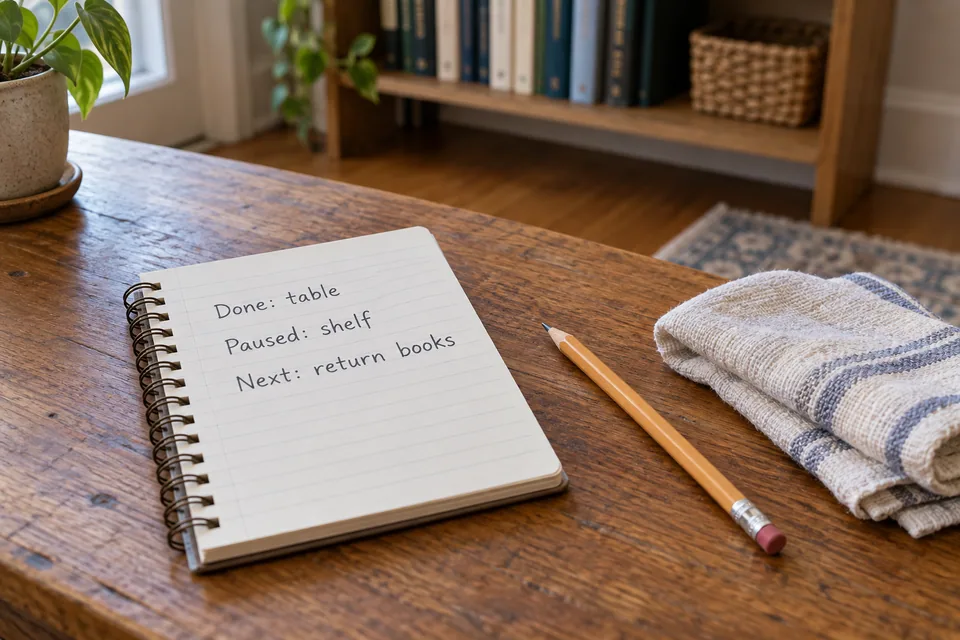
AI-generated illustration: a pause note identifies completed work, the stopping place, and one next action. This is a fictional planning example.
Suppose the planned dining-corner session includes clearing the table and returning the books beside the low shelf. If you finish the table first and then stop, the note might read: “Done: table. Paused: shelf. Next: return books.” If several people use the record, be more precise about which shelf and books you mean. Write enough to find the task again without making a full inventory.
Keep this note where you will look before the next session: one notebook, one shared note, or the routine table below. If the record moves between several apps and scraps of paper, the next step can become another thing to search for.
A pause record describes what happened. An unfinished boundary can be reduced, reassigned by agreement, or returned to later. Keep the next action visible even when you change the plan.
Use one table for the plan and the handover
The rows below are hypothetical examples. Replace the days, names, and spaces with your own. “Actual work” records what happened; it can stay blank until the session ends. Add a duration only if you want to record your own observation.
When | Who | Small scope | Actual work | Paused at | Next action |
|---|---|---|---|---|---|
Next available session | You / agreed person | Clear the tabletop and return the books beside the low shelf | Table cleared | Low shelf | Return the books beside the shelf |
Following session | You / agreed person | Return those books | Fill in after the session | Fill in if interrupted | Name one physical action |
Weekly review | People sharing the work | Review one recurring task | Record what was practical | Record what kept slipping | Reduce, move, or reassign the scope |
For a blank version, copy the six column headings and start with a single row. A weekly grid is optional. If your working days change, use “next available session” and decide when to look at the note again. If you do use weekdays, leave room to revise a row when circumstances change.
When you miss a day, review before adding work
Start by checking what needs attention now, such as a fresh spill or a blocked walkway. Address immediate needs before selecting optional maintenance. Then read the pause note and choose one manageable action for the current session.
- Check the current condition of the space. Some old tasks may already have been handled or may need a different scope.
- Choose one next action from the note, or replace it with the more useful action you can do now.
- Record the completed boundary and choose when to review the remaining work.
You can move a task, reduce its boundary, or agree a new owner. If the same job keeps moving forward, inspect the job itself: is it too large, hard to reach, dependent on someone else, or scheduled at an impractical time? Change that condition before adding more reminders.

AI-generated illustration: returning one identified group of books is a concrete restart action. The scene is explanatory, not a documented before-and-after result.
The Spruce’s weekly schedule includes a stopping point and returning to unfinished work later. Our suggested table adds an explicit record of the boundary and handover. It is an editorial planning framework; we have not tested it as a household intervention.
Keep the next week adjustable
At the next review, look at a few actual entries. Keep the boundaries that were clear, reduce jobs that repeatedly expanded, and check any handover that caused confusion. You can change the structure from tasks to zones if that better matches the work you observed.
Published schedules vary in scope and time estimates. They do not establish how long your particular home will take. Start by recording what you actually complete. If you need a timed stopping cue, choose one that fits your session and treat unfinished work as information for the next plan.
This guide concerns planning and restarting. For the cleaning method itself, follow the relevant surface, appliance, and product instructions. A scheduling example does not determine a suitable product or cleaning frequency for every home.
For your next session, fill in one line: when you will look at the plan, who is responsible, and the small boundary you intend to finish. Leave the actual-work and pause fields ready to complete afterward.
Sources and editorial notes
This guide develops TidyNot’s maintain–pause–resume approach from a comparison of five published cleaning schedules. The examples, table, and AI-generated images were created for explanation. We did not reproduce source photographs or test the proposed routine in a household.
- Clean Mama: A Manageable, Realistic Cleaning Routine for Any Schedule — task-based routine and schedule adjustments.
- The Crowned Goat: Modern Day Cleaning Schedule Made Easy — daily and weekly work linked to existing routines.
- Martha Stewart: Home Cleaning Schedule — a frequency-based reference.
- Sara Lee Simplicity: Simple Weekly Cleaning Schedule — a zone-based example, reviewed in the retained source comparison.
- The Spruce: A Realistic Weekly Cleaning Schedule to Get You Started — weekly structure with a stopping and resuming example.
Source comparison prepared October 19, 2026. Four source pages were rechecked during article preparation. Sara Lee Simplicity’s guide is summarized from our October 19 source review; it was not rechecked during drafting. Source estimates and personal experiences are not TidyNot performance measurements.
Evidence and scope
1. Clean Mama: A Manageable, Realistic Cleaning Routine
Claim covered: Task-based schedules are one possible structure
Clean Mama’s own routine assigns weekly tasks to days and discusses adapting the routine to different schedules.
Clean Mama: A Manageable, Realistic Cleaning Routine. US-origin household routine; individual circumstances vary. Checked: .
This is the author’s method, not independent evidence that the method works for every household.
2. Editorial application
Claim covered: The pause-and-handover table is an editorial framework
TidyNot suggests recording a stopping boundary and the next action. This has not been tested as a household intervention.
TidyNot editorial suggestion. English edition; adapt to the actual home and item. Checked: .
No measured time saving or tested household outcome is claimed.